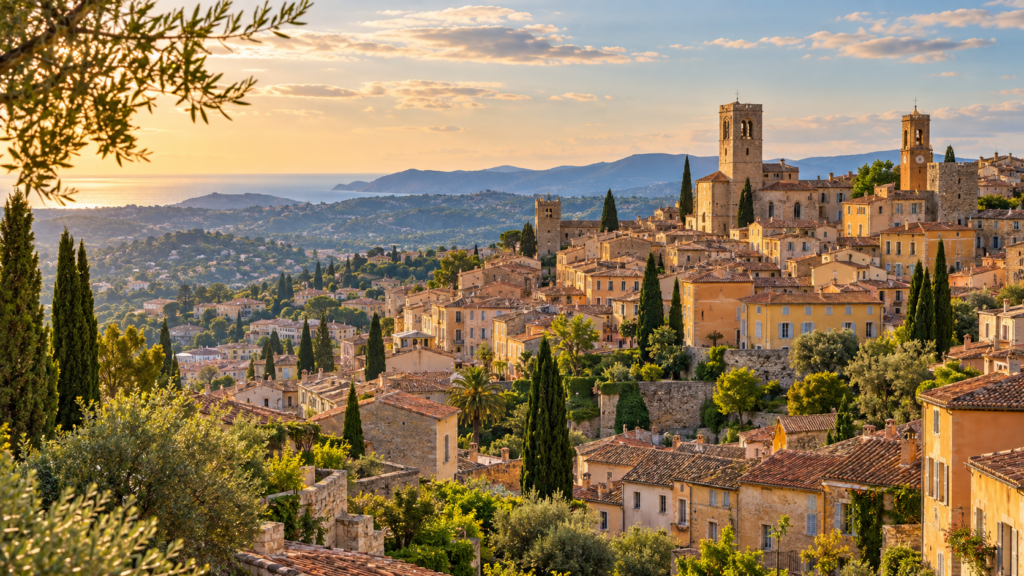
Why is Grasse the world capital of perfume?
Located in the heart of the French Riviera, in the Alpes-Maritimes, Grasse is internationally recognized as the capital of perfume. For centuries, this Provencal city has cultivated exceptional know-how that has shaped the history of French and international perfumery.
But how has this ancient tanner city become an essential reference in the world of fragrances?
From the first scented gloves to contemporary olfactory creations, discover the fascinating history of Grasse and the traditions that today make its reputation.
From tanneries to the first perfumed gloves: the origins of fatty perfumery
The history of perfume in Grasse dates back to the 16th century, a time when the city was best known for its tanning and manufacturing of leather gloves.
If this industry contributed to local economic prosperity, it had a major disadvantage: the particularly strong smells of leather.
To remedy this, the artisans of Fatsois begin to perfume their creations with the help of floral essences, including jasmine, rose and orange blossom.
This innovation quickly met with success with the French aristocracy. According to tradition, Catherine de Medici helped to popularize the perfumed gloves in the royal court.
This association between leather crafts and odorous raw materials marks the beginnings of an industry that would profoundly transform Grasse's identity.
Over time, tannery activities gradually decline, leaving room for specialization in aromatic plant cultivation and the manufacture of perfumed compositions.
Developing a know-how unique to the world
Grasse's success is not based solely on his history. It is also the result of technical and craft expertise transmitted and perfected over generations.
Gradually, fat professionals develop a remarkable mastery of several essential stages in the creation of a perfume:
The cultivation of perfume plants, allowing the selection of raw materials with the desired olfactory properties.
The extraction of raw materials, intended to capture and preserve the smelling molecules of flowers and plants.
Processing into perfumed concentrates, thanks to the know-how of perfumers and their knowledge of olfactory associations.
This complementarity between agriculture, technical mastery and creativity allows Grasse to build an international reputation.
A UNESCO recognized heritage
Grasse's influence today goes far beyond French borders.
The know-how related to perfume in Grasse Country was included in 2018 on UNESCO's representative list of intangible cultural heritage of humanity.
This recognition concerns three essential dimensions: the cultivation of the perfume plant, the knowledge and transformation of natural raw materials, and the art of composing perfume.
It stresses the importance of preserving and transmitting a living heritage, closely linked to the identity of the territory of the country.
The iconic flowers of Grasse: at the heart of the olfactory identity
Grasse has established itself in the world of perfumery, but it is also due to its natural environment and its tradition of valorizing plant raw materials.
Its territory and perfume culture are associated with a wide variety of scents, which have become emblematic of French perfumery.
Among the most representative raw materials are:
The rose, appreciated for its delicate, soft and refined floral facets.
Jasmine, known for its intense, sensual and enveloping fragrance.
The Tuberator, a flower with powerful character and opulent nuances.
Lavender, emblematic of Provence and its aromatic chords.
Mimosa, appreciated for its sweet notes, powdery and slightly honeyed.
The orange flower, which brings bright and delicate floral facets.
Vervein, sought for its plant freshness and lemony.
Citrus fruit, essential to bring shine, freshness and vivacity to the compositions.
These raw materials are a source of inspiration for perfumers, who combine them to create original olfactory signatures.
The big houses that marked the history of the grassois perfumery
Grasse's history is also inseparable from that of several historic perfume houses, whose reputation still contributes to the city's influence today.
These include:
Galimard, founded in 1747
One of the oldest perfume houses in France, which bears witness to the long-standing tradition of the country.
Molinard, founded in 1849
A historic house known for its artisanal heritage and its olfactory universe.
Fragonard, founded in 1926
An iconic house that contributes to the transmission and discovery of the heritage of the perfumery of Grasse.
Through their history, these houses illustrate the continuity of a tradition that combines heritage, creativity and excellence.
Bastide Fragrances: perpetuating the excellence of grassoise perfumery
Placed in Grasse, Bastide Fragrances is a continuation of this perfumer heritage, while proposing a contemporary approach to olfactory creation.
Our ambition is to support companies and brands in the development of unique fragrances, capable of translating their identity and bringing their projects to life.
We offer our expertise to various applications, including:
Fine perfumery, with the development of custom olfactory creations.
Home fragrances, to imagine singular sensory ambiences.
Perfumed concentrates, developed according to the needs and identity of each project.
Our approach is based on the association of three core values: knowledge of raw materials, technical expertise and creativity.
Heirs of a long tradition in Grass, we consider each creation as a meeting between historical know-how and a unique olfactory vision.