
Why is vanilla so popular in perfumery?
Sweet, warm and immediately recognizable, vanilla occupies an essential place in the universe of perfumery. Present both in the great classics and in contemporary creations, it goes through times without ever losing its popularity.
But contrary to the ideas received, vanilla is not simply a sweet smell. Depending on the way it is worked and the materials it is associated with, it can be creamy, oaky, amber, spicy or deeply greedy. This olfactory wealth explains why it seduces both consumers and perfumers.
A comforting and familiar note
Vanilla is often associated with pleasant memories: a dessert prepared at home, a still hot pastry or a sweet and enveloping atmosphere. Its smell naturally evokes warmth, comfort and gourmetness.
This emotional dimension plays an essential role in its success. When it appears in a scented composition, vanilla brings a familiar and reassuring sensation. It thus has an almost universal capacity to evoke well-being and comfort.
In perfumery, this familiarity makes certain creations more accessible, enveloping and seductive. A vanilla touch can soften an intense composition or bring more sensuality to a more discreet fragrance.
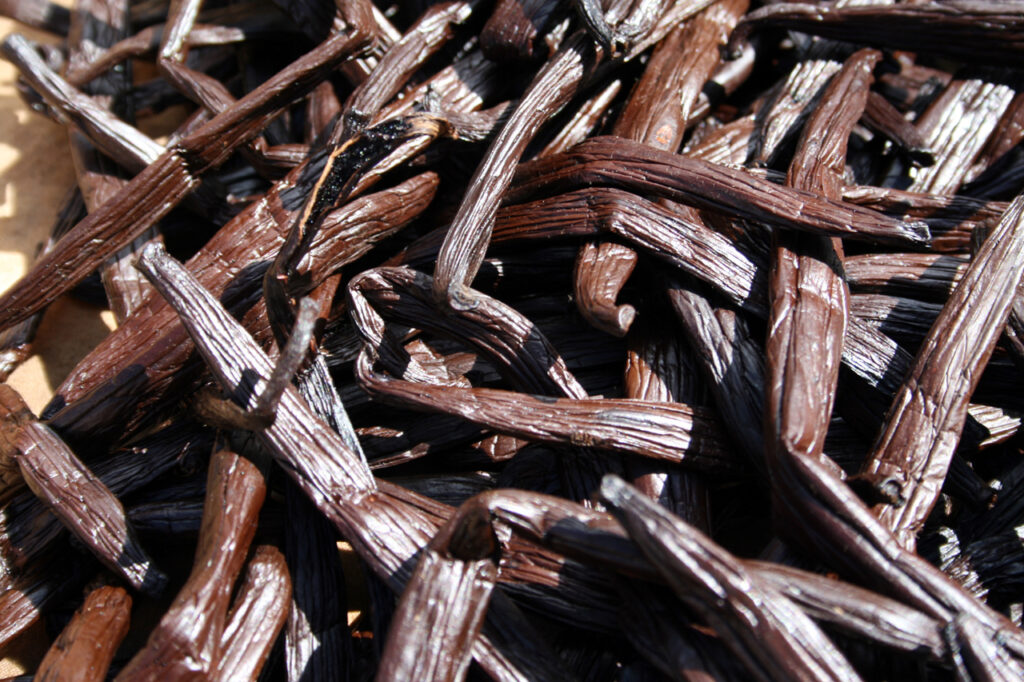
Much more than a simple sweet note
Vanilla is regularly associated with gourmet fragrances, but its olfactory profile is much more complex. Its rendering depends on its dosage, quality and other raw materials present in the formula.
In particular, it may reveal:
- creamy and milky facets;
- woody and amber shades;
- spicy or Oriental accents;
- a gourmet, warm and addictive dimension.
This versatility allows perfumers to use in many olfactory families.
Combined with floral notes, vanilla can bring sweetness and roundness. With wood, it becomes deeper and elegant. Accompanied by spices or amber materials, it reveals a warmer and mysterious character. It can also take a very greedy direction when it meets caramel, chocolate or coffee.
A raw material as modern as ever
Despite its ancient use in perfumery, vanilla continues to reinvent itself. Current creations sometimes move away from the very sweet image that is traditionally associated with it.
Some fragrances highlight dry and oaky vanilla, while others explore more smoked, salty, spicy or mineral facets. It can also be worked lightly and brightly, especially when it is associated with citrus fruits, white flowers or musk notes.
This ability to evolve with trends explains why vanilla remains present in many contemporary creations. It can be sweet without being childish, greedy without becoming disgusting, and sensual without necessarily being too intense.
Why does vanilla remain a must?
Vanilla is still so popular, because it combines several qualities sought after in perfumery. It has a widely appreciated smell, a great olfactory richness and a remarkable ability to create emotion.
It can reassure, seduce, wrap or surprise depending on how it is integrated into the composition. It thus meets the expectations of lovers of gourmet perfumes as well as those of people seeking woody, amber or more sophisticated creations.
Universal without being uniform, vanilla remains an essential raw material of the perfumer's palette. Timeless and versatile, it continues to inspire fragrances capable of crossing trends and leaving a lasting imprint in memories.